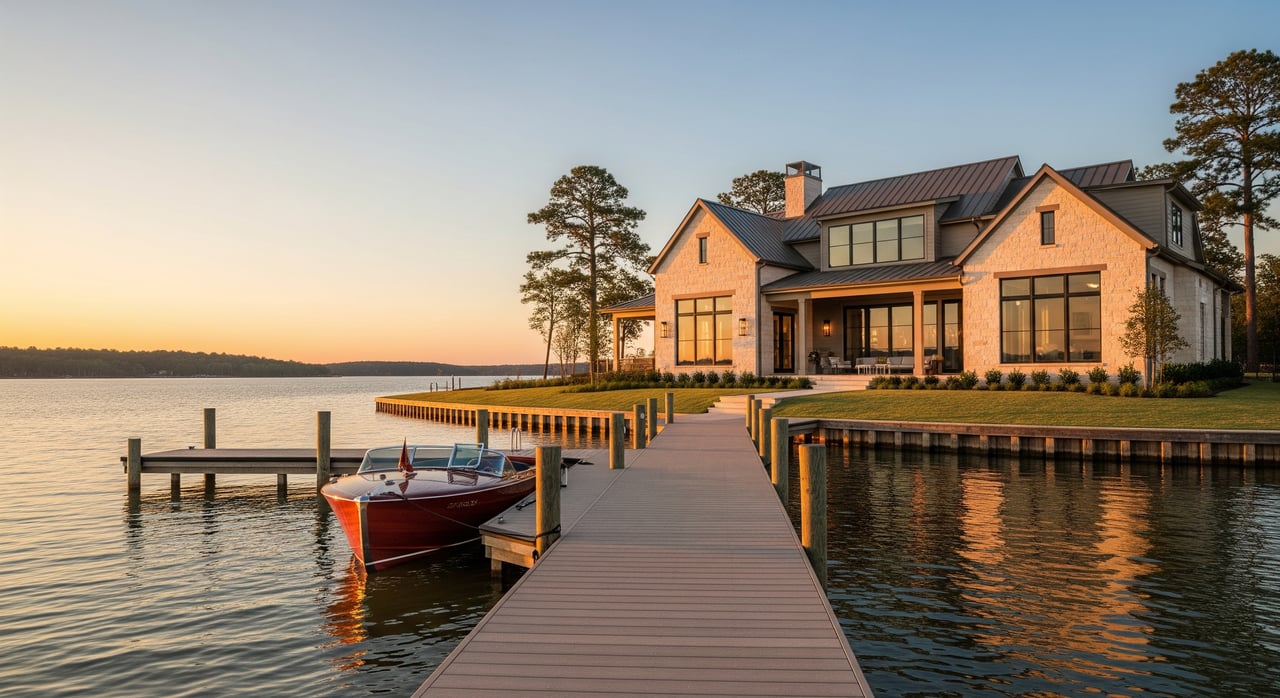
Dreaming of coffee on the dock and sunset boat rides on Lake Conroe? The lifestyle sells itself, but the numbers matter just as much. Owning a waterfront home comes with unique costs you will want to understand before you buy. In this guide, you will get a practical breakdown of upfront, ongoing, and risk-related expenses specific to Lake Conroe, plus a clear checklist to help you budget with confidence. Let’s dive in.
What drives the total cost
Owning on the water adds value and complexity. You will pay for the property, plus the shoreline, dock, and risk profile that come with it. Your total cost of ownership includes purchase and closing costs, permits and association fees, one-time capital projects, annual expenses, and storm-readiness investments. Some items are predictable each year, while others are larger, less frequent projects.
The biggest variables are site specific. Elevation, FEMA flood zone, dock and bulkhead condition, HOA rules, and local tax rates have a major impact. A smart plan budgets for both annual line items and occasional big-ticket work.
Upfront buying costs on Lake Conroe
Price premium for the water
Waterfront properties usually sell at a premium compared to similar inland homes. The premium depends on factors like view, direct water access, dock configuration, neighborhood, and overall condition.
Closing, title, and lending items
You will see typical Texas closing costs for title, escrow, and lender fees. If you finance, your lender may require an elevation certificate or certain repairs before closing. Commission structures vary by transaction.
Specialized inspections for waterfront
Plan on a standard home inspection plus specialists for the shoreline and dock. Consider:
- Structural and foundation inspection
- Dock and boathouse inspection
- Seawall or bulkhead assessment
- Termite and pest inspection
- Septic inspection if the home is not on sewer
- Moisture or mold evaluation if water intrusion is suspected
Survey and elevation certificates
A current survey is crucial on a waterfront lot. You want clear boundaries and documentation of any encroachments or shoreline structures. If flood risk is a question, an elevation certificate can clarify your FEMA rating and potential flood insurance requirements.
Permits, rules, and associations
SJRA rules and permitting
Lake Conroe is managed by the San Jacinto River Authority. Before you build, modify, or repair a dock, boathouse, or shoreline structure, confirm permitting requirements through the San Jacinto River Authority’s Lake Conroe resources. Proper permits and code-compliant work help with insurability and future resale.
County, city, and septic permits
Building permits for docks, seawalls, and septic work run through Montgomery County or the city with jurisdiction. Septic systems require specific permits and inspections if applicable.
HOA, POA, and MUD costs
Many lake neighborhoods have HOA or POA dues for amenities and upkeep. Some areas fall under a Municipal Utility District. MUDs levy taxes or assessments for water, sewer, drainage, and infrastructure. Verify dues, rules, and any planned assessments before you make an offer.
Big one-time projects you might face
These are illustrative ranges to help you plan. Actual costs vary by site, materials, and contractor. Get local quotes before budgeting precisely.
- Dock construction or replacement: roughly $5,000 to $20,000 for a basic private dock, and $20,000 to $100,000 or more for larger docks with covered boathouses and lifts.
- Seawall or bulkhead repair or replacement: about $10,000 to $100,000 or more depending on length and method.
- Septic work: routine pumping runs about $300 to $800 every 3 to 5 years. Full replacement can be $5,000 to $20,000 depending on system type.
- Shoreline stabilization and erosion control: costs vary by approach and exposure. Budget for professional design if your lot faces heavy wave action.
Ongoing yearly costs to budget
Property taxes
Texas property taxes are a major annual expense. Your bill is the appraised value multiplied by the combined local tax rate, minus any exemptions you qualify for, such as a homestead exemption. Waterfront homes often appraise higher. Check current appraisals and exemptions through the Montgomery County Appraisal District.
Homeowners insurance
Waterfront exposure and storm risk can affect homeowners insurance pricing and deductibles. Many Texas policies carry a separate wind or hurricane deductible that is a percentage of your insured value. For general guidance on coverage and deductibles, review the Texas Department of Insurance’s homeowners resources.
Flood insurance
Flood coverage is separate from your homeowners policy. Lenders typically require flood insurance if the home lies in a FEMA Special Flood Hazard Area. Premiums are based on flood zone, elevation, structure value, and claims history. You can look up your flood zone on the FEMA Flood Map Service Center and learn how NFIP flood policies work. Private flood insurance may also be available.
Annual flood insurance costs vary widely. Some properties pay a few hundred dollars per year, while higher-risk waterfront homes can see four-figure premiums.
Utilities and services
Expect typical utilities plus any systems tied to lake living. Homes with lifts, pumps, or larger HVAC loads may see higher electricity usage. If the home has septic, budget for routine inspections and periodic pumping. Add trash, internet, and optional services like pest control and lawn or tree care.
Dock and shoreline maintenance
Plan for annual cleaning, sealing or staining, hardware replacement, and minor repairs. A general range is $500 to $5,000 per year depending on size, materials, and exposure.
Marina or slip fees
If you do not keep a boat at your private dock, you may opt for a marina slip. Rates vary by location and boat size, so get current pricing from local marinas.
Storm readiness and risk mitigation
Texas weather can bring severe wind, hail, and heavy rain. While Lake Conroe is inland, hurricane remnants and intense thunderstorms still impact the area.
Consider:
- Impact-resistant windows, reinforced doors, or roof upgrades
- Generator purchase and installation, often $2,000 to $10,000 depending on capacity and hookup
- Elevation-related upgrades such as flood vents or elevating critical electrical components
- An emergency fund for temporary lodging and immediate repairs after a storm
- Tree trimming, removal, and debris cleanup that can range from a few hundred to several thousand dollars
Wind damage is typically handled under homeowners insurance, subject to deductibles. Flood damage needs a flood policy.
Flood zones, insurance, and lenders
Lenders often require flood insurance if the property sits in a FEMA Special Flood Hazard Area. Elevation certificates help determine risk and pricing. Some homes may be eligible for a Letter of Map Amendment or Revision depending on the site and survey data.
Insurers and lenders will review FEMA maps, base flood elevation, and any available elevation certificates. Getting this information early in your process helps avoid surprises later.
Resale impact and long-term value
Waterfront homes tend to hold a premium, but the buyer pool can be more specialized. Documented maintenance, recent dock and bulkhead work, and a clean insurance history can support value and speed up a future sale.
Be aware that updates to FEMA flood maps or local regulations can shift insurance costs and buyer demand. Keeping permits in order and records organized helps preserve your investment.
Due diligence checklist for buyers
Use this list to confirm costs, risks, and compliance during your option period.
- Request a recent survey showing lot lines and the water boundary.
- Obtain an Elevation Certificate or order one if needed to clarify flood rating.
- Verify SJRA and local permits for docks, lifts, seawalls, and shoreline work.
- Review records of dock, boathouse, bulkhead, and shoreline repairs.
- Ask the seller for flood insurance claims history for the last 10 years.
- Read HOA or POA covenants, budgets, recent assessments, and meeting minutes.
- Confirm MUD taxes or assessments and any upcoming obligations.
- If applicable, gather septic records, last pumping date, and inspection results.
- Ask for past insurance claim history related to wind, water, or mold.
- Schedule specialized inspections: dock contractor or engineer, seawall assessment, termite and pest, and moisture or mold.
- Speak with an insurance agent experienced with Texas inland-lake properties.
- Call the appropriate county or city permitting office to confirm current rules and fees.
Sample budget snapshot
These numbers are examples to help you think through the range of ownership costs. Always verify with local pros.
- Property taxes: depends on appraised value and combined local tax rate, minus exemptions
- Homeowners insurance: typically higher than comparable inland homes, varies by coverage and deductibles
- Flood insurance: from several hundred to several thousand dollars annually depending on zone and elevation
- Dock maintenance: roughly $500 to $5,000 per year
- Utilities and services: varies by home size, systems, and usage
- Reserve for capital projects: docks can run $5,000 to $100,000 or more, seawalls $10,000 to $100,000 or more
- Storm readiness: a standby generator can be $2,000 to $10,000 installed
A practical approach is to set aside a yearly maintenance budget plus a longer-term reserve for dock, bulkhead, and septic work.
How Reaves Realty Group helps
Buying on Lake Conroe is as much about the shoreline as the house. You deserve clear guidance on both. Our team pairs local market expertise with hands-on service so you can move quickly and confidently.
Here is what you can expect with us:
- Buyer representation focused on the Montgomery County lakefront market
- Data-informed pricing insights and offer strategy
- Coordination of specialized inspections for docks, seawalls, and septic
- Guidance on SJRA, county, and HOA requirements
- Introductions to trusted local lenders and insurance pros so you can understand costs early
- Relocation support and new-construction guidance if you prefer to build on the water
If you are considering a specific property, we will help you estimate the full cost to own, confirm permits and risk factors, and negotiate from a position of strength. Ready to start the conversation? Connect with the team at Reaves Realty Group.
FAQs
Will I be required to buy flood insurance on Lake Conroe?
- It depends on the FEMA flood zone and your lender; properties in a Special Flood Hazard Area usually require flood insurance when financed.
How much more does homeowners insurance cost for a waterfront home?
- Pricing varies by insurer, coverage levels, elevation, age of home, roof type, and claims history; many Texas policies have a separate wind or hurricane deductible.
Who maintains the dock or seawall for a private home?
- Owners typically maintain private docks and shoreline stabilization unless community documents state otherwise, and SJRA rules apply to structures on Lake Conroe.
Can I build or modify a dock on Lake Conroe?
- Permits are generally required; check SJRA and local permitting offices before planning any construction or modifications.
How often do docks and seawalls need major work?
- Timing varies by materials and exposure; docks often require significant work every 10 to 25 years, and seawall lifespans vary widely with construction method and wave action.
What upfront inspections should I order for a waterfront home?
- In addition to a general home inspection, consider dock and boathouse, seawall or bulkhead, termite and pest, septic if applicable, and moisture or mold evaluations.